
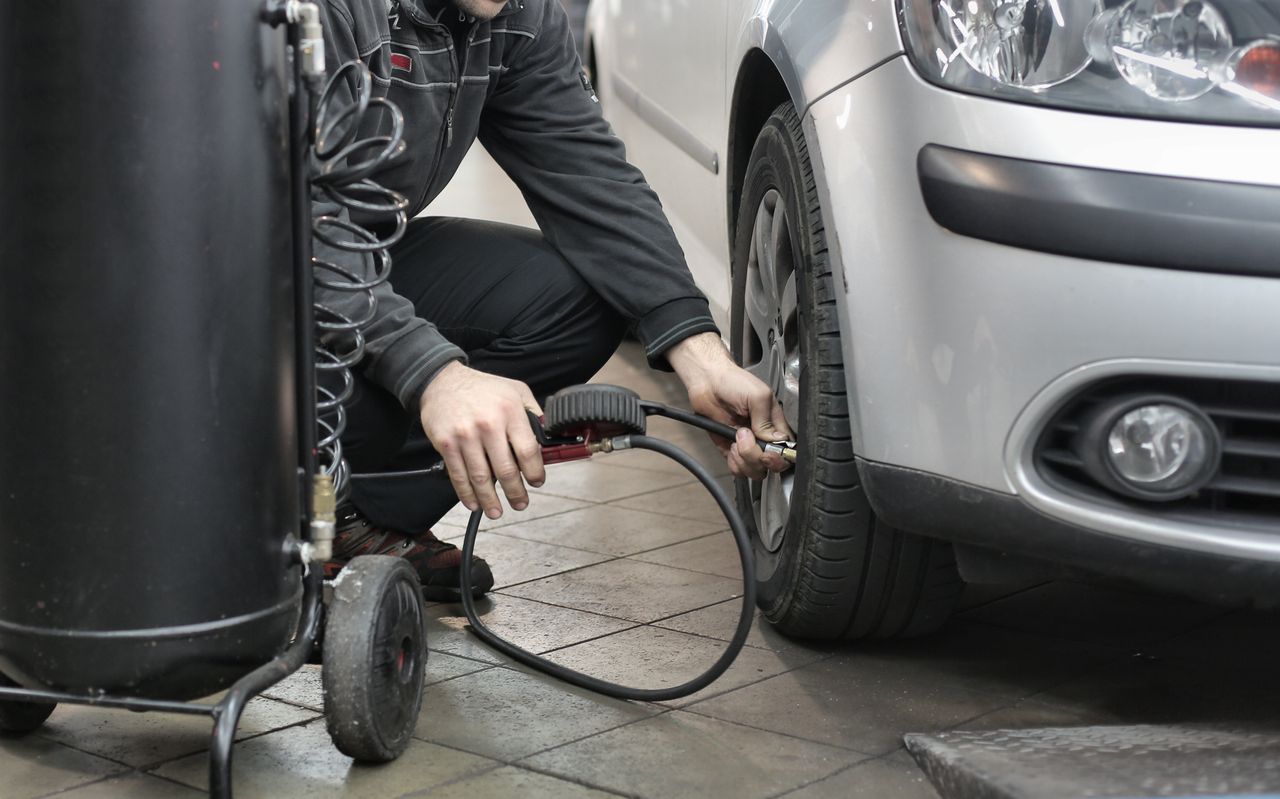
How Compressed Air Makes Tyre Inflation Easier
Keeping vehicle tyres correctly inflated is an important part of routine vehicle maintenance. Proper tyre pressure can support safe handling, predictable braking, even tread wear and efficient operation. For drivers, fleet operators and workshop users, having a reliable way to check and adjust pressure can make regular maintenance considerably more convenient.
Traditional hand-operated pumps can be useful for occasional top-ups, but they become less practical when several tyres need attention or when a tyre requires a significant pressure adjustment. This is where air compressors can make the process faster and more consistent. They provide a readily available source of pressurised air that can be delivered through a suitable inflation hose and tyre chuck.
Using compressed air does not remove the need for accurate pressure checks or proper safety precautions. Tyres should always be inflated according to the vehicle or tyre manufacturer’s recommended pressure, rather than simply adding air until the tyre looks firm. Understanding how compressed air works for tyre inflation helps motorists and workshop users approach the task efficiently while avoiding unnecessary risks.
Why Correct Tyre Inflation Matters
Tyre pressure affects how a vehicle behaves on the road. When pressure is significantly below the recommended level, more of the tyre may flex during operation, which can increase heat generation and affect handling. Underinflation can also contribute to uneven tread wear and increased rolling resistance.
Overinflation creates a different set of concerns. A tyre inflated beyond its recommended pressure may have a smaller contact area with the road and can produce a firmer ride. Excessive pressure can also affect handling characteristics and tread wear. For this reason, tyre inflation should always be based on the correct specifications rather than appearance alone.
The recommended pressure is usually provided by the vehicle manufacturer and may be listed on a placard located inside the driver’s door area, on the door frame, or in the vehicle handbook. Some vehicles have different recommended pressures for front and rear tyres or for particular loading conditions. These specifications should be checked before adjusting pressure.
How Compressed Air Simplifies Tyre Inflation
An air compressor works by drawing in atmospheric air, compressing it and storing or supplying it under pressure. When connected to appropriate inflation equipment, that compressed air can be directed into a tyre through the valve stem.
The main advantage is convenience. Instead of repeatedly operating a manual pump, the user can connect an inflation hose and deliver air relatively quickly. This is particularly useful in garages, workshops, agricultural settings and commercial environments where multiple vehicles or tyres may require attention.
The compressor itself does not determine the correct tyre pressure. The pressure must be monitored using a suitable gauge. Some dedicated inflators combine an air connection with a pressure gauge, allowing the operator to observe pressure while adding air. Digital inflators may provide an easy-to-read display, while analogue gauges can also be effective when properly maintained and used correctly.
Another benefit is that compressed air can make routine pressure adjustments less physically demanding. This can be valuable when servicing larger tyres, working on several vehicles or carrying out regular fleet maintenance.
Choosing Suitable Equipment for Tyre Inflation
Not every compressor setup is equally appropriate for inflating tyres. A small compressor can be sufficient for occasional passenger-vehicle top-ups, while heavier-duty applications may require equipment with greater airflow and storage capacity.
The compressor’s pressure capability is only one part of the equation. Airflow, often expressed as litres per minute or cubic feet per minute, can influence how quickly the system replenishes air after pressure drops. Tank capacity can also affect how frequently the compressor needs to run during repeated inflation tasks.
For ordinary vehicle maintenance, the equipment should be selected according to the tyres being serviced and the expected frequency of use. A workshop servicing numerous vehicles throughout the day will generally have different requirements from a private user who only needs to make occasional adjustments.
Useful components can include:
- A suitable air compressor with adequate pressure and airflow capacity.
- A properly rated inflation hose and tyre chuck.
- A reliable pressure gauge or dedicated tyre inflator.
- Appropriate connectors that fit the compressor and inflation equipment securely.
- Basic protective equipment and a clean, unobstructed working area.
Compatibility matters. Hoses, fittings, gauges and chucks should be suitable for the pressure involved and maintained in good condition. Damaged hoses, leaking connections or inaccurate gauges can make inflation inefficient and may create unnecessary safety concerns.
The Basic Process of Inflating a Tyre With Compressed Air
The process is straightforward when the correct equipment is available, but accuracy is more important than speed. Before adding air, the tyre should be inspected and its recommended pressure confirmed.
First, check the tyre pressure with a reliable gauge. Ideally, pressure should be checked when the tyres are cold or have not recently been driven for an extended period, because heat can affect pressure readings. Compare the measured value with the recommended specification for that particular vehicle.
Next, connect the inflation hose and tyre chuck securely to the valve. Air can then be added gradually while monitoring the gauge. There is no benefit in rushing the process, particularly when only a small pressure adjustment is required.
Once the recommended pressure has been reached, disconnect the chuck carefully and replace the valve cap. The tyre should then be checked again if there is any doubt about the reading or if the equipment used does not provide a dependable pressure indication.
For a small pressure correction, the entire process can take very little time. Larger tyres or tyres requiring substantial inflation may take longer, depending on the compressor’s airflow and the size of the tyre.
Why Pressure Gauges Are Essential
Compressed air can enter a tyre quickly, particularly when using a high-output compressor. That makes a reliable gauge an essential part of the inflation setup.
A tyre should not be inflated based on how it feels when pressed by hand. Modern vehicle tyres can feel relatively firm even when their pressure is not within the recommended range. Visual inspection alone is similarly unreliable.
A pressure gauge provides a measurable reading that can be compared against the manufacturer’s specification. Gauges can vary in accuracy, so equipment used frequently should be checked and maintained appropriately. If a gauge appears damaged or produces inconsistent readings, it should not be relied upon for important pressure adjustments.
Some inflators allow the operator to set a target pressure, but automated or preset functions should still be used according to the equipment manufacturer’s instructions. A setting on an inflator should never replace checking the correct pressure specification for the vehicle.
Safety Considerations When Using Compressed Air
Although compressed air is useful for routine maintenance, it should be treated as stored energy rather than harmless ordinary air. Pressure systems can present hazards if unsuitable or damaged equipment is used.
Tyres themselves also require care. A tyre that is damaged, severely worn, visibly deformed or suspected of having structural problems should not simply be inflated and returned to service without proper assessment. Inflation can change the condition of a damaged tyre and should not be regarded as a substitute for inspection or professional repair.
Before working with compressed air, check hoses, connectors and inflation equipment for visible damage. Make sure connections are secure and that the equipment is rated appropriately. Avoid using improvised fittings or components that are not intended for compressed-air applications.
When dealing with unusual tyre problems, persistent pressure loss or visible damage, professional tyre assistance may be appropriate. A tyre that repeatedly loses pressure may have a puncture, valve problem, wheel issue or another fault that needs to be identified rather than repeatedly corrected by adding air.
Benefits for Garages and Workshop Users
For a busy workshop, compressed air can provide a practical way to handle repeated tyre inflation tasks. Instead of relying on separate manual pumps, one suitably configured system can supply air for a range of maintenance equipment.
The same compressed-air supply may also support other workshop applications when the compressor and accessories are appropriately selected. However, each tool has its own airflow and pressure requirements, so the compressor should be sized for the intended workload rather than assuming that one specification suits every application.
Efficiency can also improve when inflation equipment is kept organised. A dedicated hose, accessible gauge and suitable tyre chuck can reduce setup time. Regularly inspecting the equipment helps prevent leaks and ensures that pressure readings remain dependable.
For commercial operations, consistency is particularly valuable. Vehicles that are checked and maintained according to a defined procedure are easier to manage than those serviced according to visual judgement alone. A documented maintenance routine can help staff follow the same basic process each time.
Getting Better Results From Your Compressor
The effectiveness of air compressors during tyre inflation depends on more than simply having a machine available. Correct equipment selection, good maintenance and sensible operating practices all contribute to a better result.
The compressor should be positioned according to the manufacturer’s instructions and kept in an appropriate environment. Ventilation requirements should be observed, and the machine should be maintained at the recommended intervals. Moisture management may also be relevant because compressed air systems can accumulate condensation.
Leaks deserve attention as well. A leaking hose, connector or fitting can waste compressed air and cause the compressor to cycle more frequently. Over time, small inefficiencies can become more noticeable, particularly in a busy workshop.
The inflation accessories should also be kept clean and inspected regularly. A tyre chuck that does not seal properly can make inflation frustrating and produce inconsistent results. Likewise, a damaged hose should be replaced rather than temporarily repaired with unsuitable materials.
When Manual Inflation May Still Be Appropriate
Compressed air is convenient, but it is not essential for every situation. A manual pump can still be useful as an emergency or occasional maintenance option, particularly where no electrical power or compressor is available.
For someone who checks one vehicle’s tyres periodically, a compact manual pump may be perfectly adequate. The key requirement is still the same: the final pressure should be checked using an accurate gauge.
Compressed-air equipment becomes increasingly useful as the number of tyres, vehicles or maintenance tasks increases. Workshops and fleet operators can benefit from faster inflation and reduced physical effort, while occasional users may prefer a simpler setup.
The most appropriate approach depends on the application. Equipment should be selected based on actual requirements, not simply the maximum pressure stated on the compressor.
Maintaining Reliable Tyre Inflation Practices
Regular pressure checks are more useful than waiting until a tyre visibly appears low. Pressure can change over time because of temperature variations, natural air loss and other factors. Checking tyres as part of routine vehicle maintenance provides an opportunity to identify pressure changes before they become a larger problem.
It is also worth checking the spare tyre where one is fitted. A spare that has been sitting unused for a long period can gradually lose pressure, leaving it unprepared when it is eventually needed.
Tyre condition should be considered alongside pressure. Tread condition, visible damage, unusual wear and repeated pressure loss can all indicate that further inspection is necessary. Correct inflation is an important maintenance practice, but it cannot compensate for a tyre that is damaged or otherwise unsuitable for continued use.
For drivers and workshop operators alike, the goal should be consistent, measured maintenance. A pressure gauge, suitable inflation equipment and the correct manufacturer specification provide a much more dependable approach than relying on appearance or guesswork.
Compressed air makes tyre inflation easier because it provides a convenient and repeatable source of pressurised air. When the compressor, hose, chuck and gauge are properly matched, routine pressure adjustments can be completed with less effort and in less time. More importantly, using a measured approach helps ensure that convenience does not come at the expense of accuracy.
Whether the application involves a single passenger vehicle or regular workshop servicing, the fundamentals remain the same: confirm the correct pressure, use suitable equipment, inflate gradually, check the final reading and investigate tyres that lose pressure repeatedly. With those practices in place, air compressors can become a useful part of an efficient and responsible tyre maintenance routine.